The question comes up constantly, usually in the same form: I can get land, so can I just move the home?
You often can. The better question is whether you should, and for a large share of older homes the honest answer is no. Not because moving is impossible, but because moving a manufactured home is not a single transport bill. It is a long chain of separate costs, and the ones at the destination typically exceed the ones on the road.
Here is what that chain actually contains, so you can reason about it instead of guessing. We are deliberately not quoting dollar figures, because they vary enormously by distance, home size, state, and how much the receiving site needs. Anyone quoting a national average is guessing too.
First, the gate: will anyone accept the home?
Before cost, feasibility.
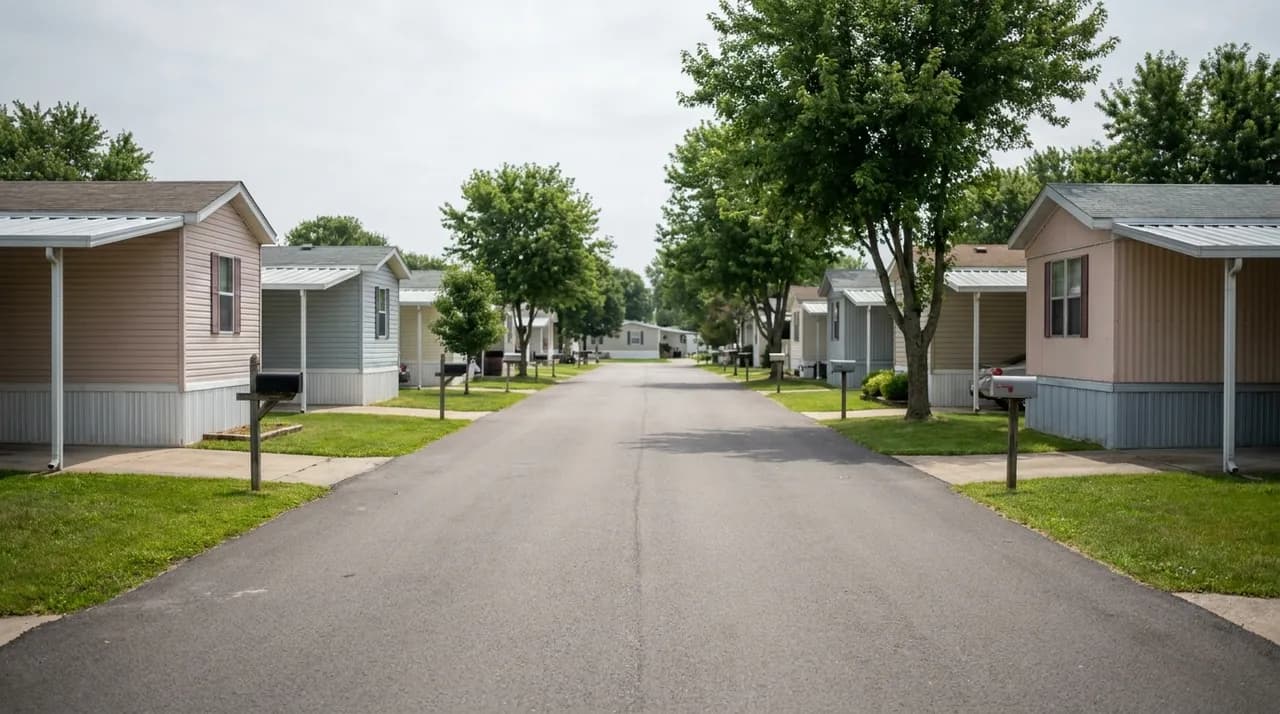
A destination that will take it. If you are moving to another community, that community has to approve both you as a tenant and the home itself. Communities commonly cap the age of homes they accept, and that cap is frequently tighter for a home moving in than for one already sited there. A home that is perfectly acceptable where it sits may be refused entry elsewhere purely on the year it was built.
Local jurisdiction approval at the destination. Placing a manufactured home on private land generally requires a permit, and zoning rules on whether they are allowed, what foundation is required, minimum size and minimum roof pitch vary from county to county and city to city. Some jurisdictions restrict or prohibit them in certain zones. Check this before you spend anything else.
A transporter willing to take it. Licensed transporters make their own judgment about whether a home will survive the trip, inspecting the frame, the outriggers, the floor system and overall structural integrity. A transporter declining the job is the clearest possible signal about the home's condition.
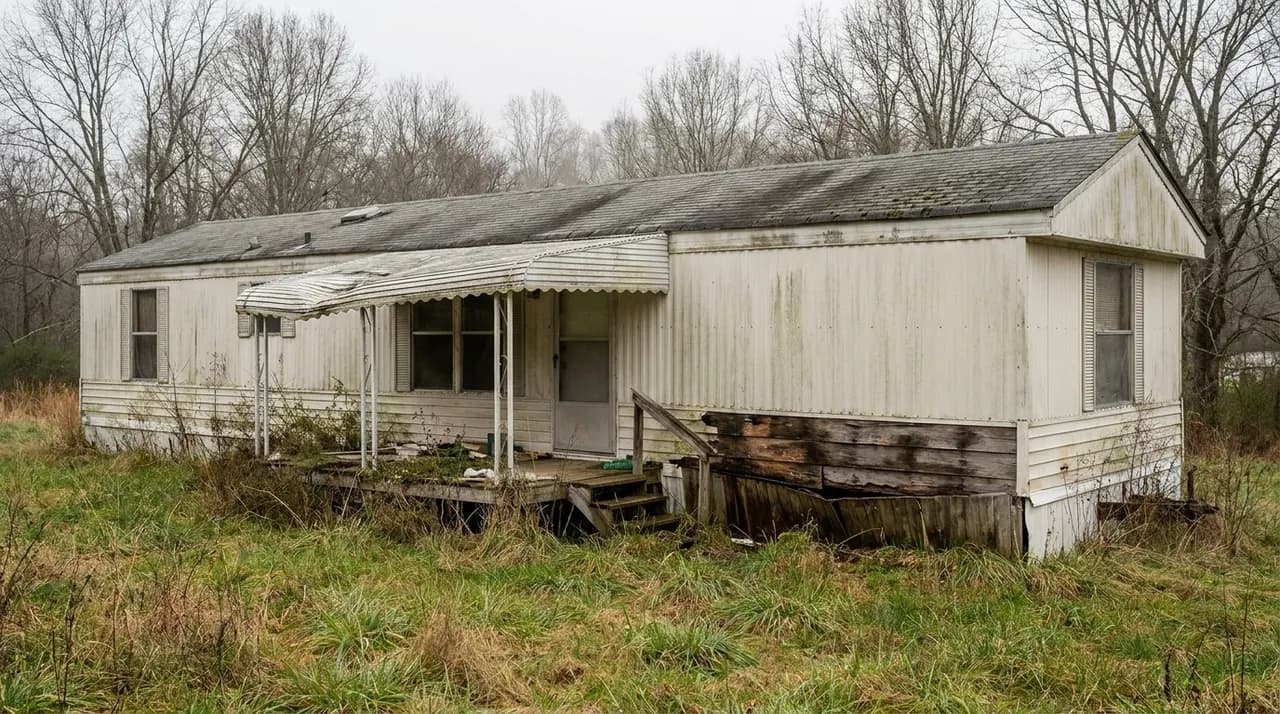
Pre-HUD homes are frequently a dead end. Homes built before the federal construction standards took effect on June 15, 1976 carry no HUD certification label. Many communities will not accept one, many jurisdictions will not permit the placement, and many insurers will not cover the move.
If any of those four gates closes, cost never becomes the question.
What the move actually consists of
Think of it as three phases, and understand that the third is usually the expensive one.
Phase one: preparing the home to leave
- Teardown of everything attached. Skirting, steps, decks, porches, carports, awnings, sheds and any add-on rooms. Attached additions frequently cannot be moved at all and get demolished.
- Disconnects. Water, sewer, electrical and gas, typically requiring licensed trades and sometimes a utility appointment.
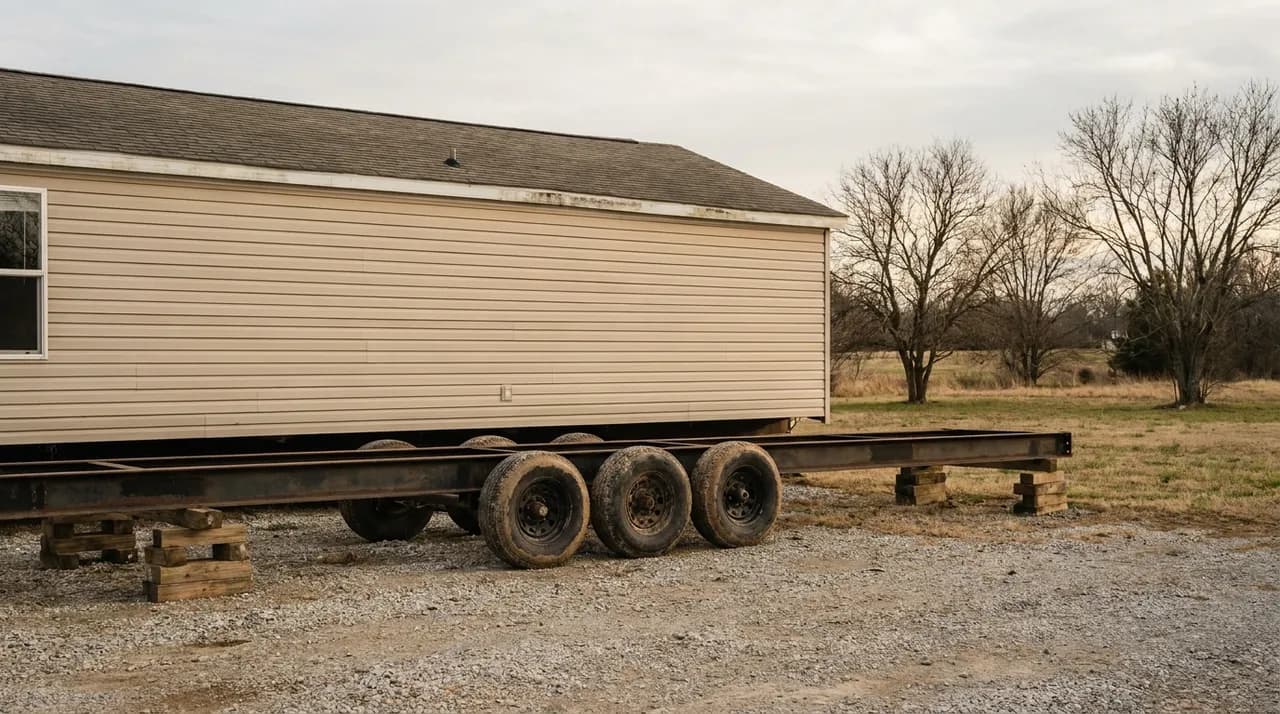
- Running gear. Axles, tires and the hitch. On a home sited for decades these are usually long gone and have to be rented or purchased, a full set per section.
- Detaching from the foundation. Removing anchors and tie-downs, and lifting the home off its piers.
- Separating a multi-section home. Splitting the halves means opening the marriage line, so the roof, the ridge, the flooring seam and the interior finishes at that line all have to be reopened and later rebuilt.
- Securing the interior. Cabinets, doors and fixtures get braced. Some interior damage in transit is normal and expected.
Phase two: the road
- Transport permits. Required by every state the home passes through, and often by individual counties or cities.
- Route survey. Low bridges, weight-restricted bridges, tight turns, utility lines and railroad crossings all constrain the route. A short move on paper can require a long detour.
- Escort vehicles. Required based on width and length, with requirements varying by state. A wide home may need front and rear escorts, sometimes a law enforcement escort.
- The tow itself, charged by distance and by section. A doublewide is two trips, not one.
- Utility line lifts, where the route requires temporarily raising overhead lines.
- Transport insurance, which some carriers will not write on older homes at all.
Phase three: setting it up again, which is where the money goes
- Site preparation. Clearing, grading and drainage at the destination.
- The foundation. Piers, footings and blocking sized and placed to the installation requirements that apply. Federal model installation standards exist, and many states run their own installation programs setting requirements for support, anchoring and ground preparation.
- Anchoring and tie-downs, per the applicable wind zone.
- Leveling, then re-leveling after settlement.
- Rejoining a multi-section home. Bolting the halves, resealing and re-roofing the marriage line, reconnecting crossover ducts, plumbing and electrical, then repairing the interior seam at ceiling, walls and floor.
- Utility connections. Water, sewer or septic, electrical service and gas. If the site has no existing service, you are paying for a well, a septic system or a service extension, frequently the largest single items in the whole project.
- Skirting, steps and landings, all demolished at the origin.
- Inspections and certificates of occupancy.
- Repair of transit damage. Drywall cracks, door and window misalignment and seam separation are common and should be expected.
The honest break-even reasoning
Here is how to think about it without needing a single number from me.
Get two quotes: what a mover will charge to move the home, and what a setup contractor will charge to set it at your specific destination, including whatever the site lacks. Add the destination's permit and utility costs. That total is your all-in move cost.
Then ask a separate question: what would it cost to buy a comparable home already sited and set up in the place you want it?
In a large share of cases, the second number is lower than the first. That is the uncomfortable fact at the center of this topic. A moved older home arrives with its original age, its original condition, and a fresh set of transit stresses, plus a rebuilt marriage line, and it has cost more than a similar home that never moved.
Three patterns make the answer clearly no:
Older homes. Move cost is largely independent of the home's value, but value drops with age and condition. At some point the fixed cost of the project exceeds what you are moving.
Wider and multi-section homes. Every cost roughly doubles and the marriage line work is added on top. A doublewide move is not twice a singlewide move, it is more.
Sites with no existing utilities. If the destination needs a well, a septic system or a power service extension, that infrastructure often dwarfs everything else, and you would incur it for any home on that site.
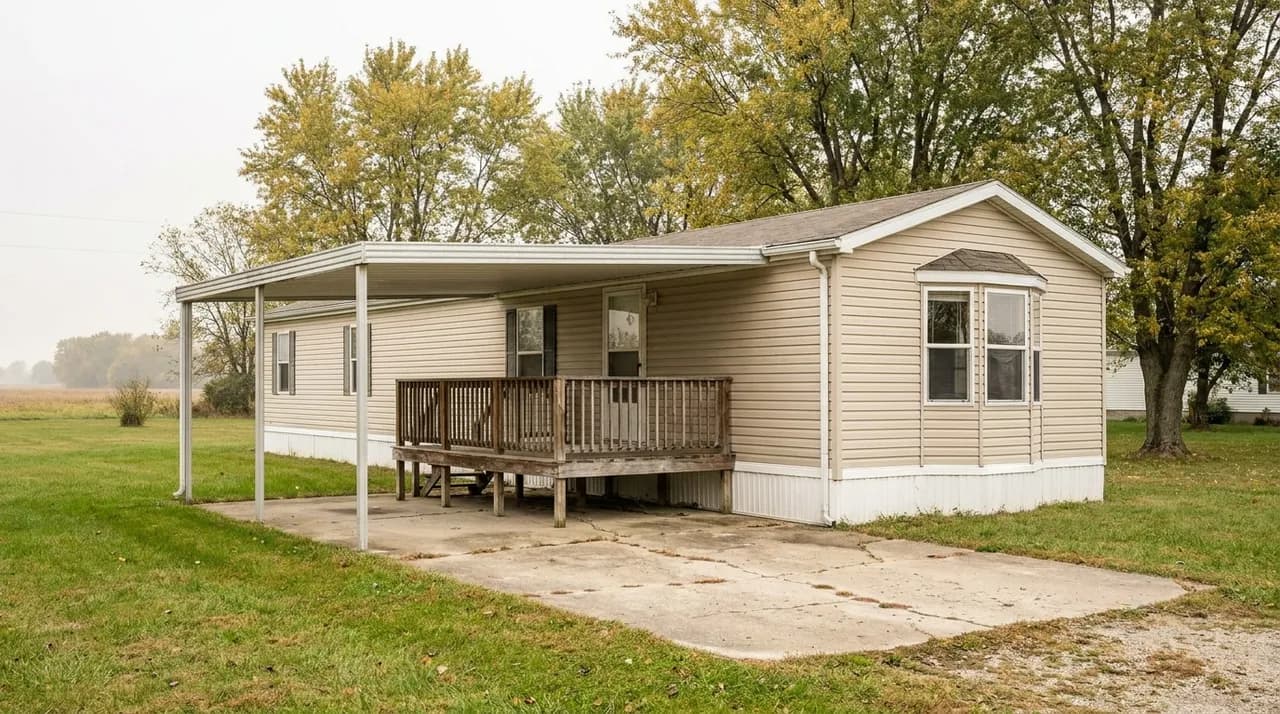
The cases where moving does make sense tend to share a profile: a newer home in genuinely good structural condition, a short distance, and a destination that is already improved with utilities, a prepared pad and permits in hand.
What to do instead, if the math says no
If the numbers do not support moving, your practical options are to sell the home where it sits, or to consider whether it is at the end of its economic life on that lot.
Selling in place means working through the community's approval process for whoever buys it, and understanding how the community's side works is most of what determines whether that goes smoothly. It also means being realistic about what the home is worth on that lot, which is a different number than what it would be worth somewhere better.
We buy manufactured homes that are staying in place, and homes that make sense to relocate. Where a seller is weighing a move, we tell them plainly when we think it does not pencil out, because someone who spends more moving a home than the home is worth has not been helped by anyone. If you want that read, send us the details, or look at what we have already matched and set up.
Transport permitting, installation standards, zoning, and what a community or jurisdiction will accept all vary by state and by locality. This is general information and not legal, engineering or transport advice. Get quotes and confirm requirements with licensed professionals and your local permitting office before committing to a move.
Sources: 24 CFR Part 3285, Model Manufactured Home Installation Standards; 24 CFR Part 3280, Manufactured Home Construction and Safety Standards