Ask ten people what a twenty-five year old manufactured home is worth and you will get ten numbers, most of them pulled from a website that has never seen the home.
Value here is driven by a different set of variables than a site-built house. Square footage and bedroom count matter far less than people expect. Structural condition, financeability and the desirability of the lot matter far more.
Here is what genuinely moves the number, roughly in order of impact, with the mechanism in each case. No figures, because any figure quoted without seeing your home and your market is fiction.
1. Whether the home is real property or personal property
The biggest single value lever, and most sellers do not think of it as a value question at all.
If the home has been legally converted to real property and sits on land you own, a buyer can pursue conventional mortgage financing. That opens the home to essentially anyone who qualifies for a loan.
If the home is still titled as personal property, especially on a rented lot, the buyer pool is cash buyers, chattel lenders and owner-finance buyers. Chattel loans typically carry higher rates and shorter terms than mortgages, which directly caps what a monthly-payment buyer can afford to offer.
More competition generally supports a stronger price, which puts this question upstream of almost everything else on the list. It also varies more by state than anything else here, so it is worth understanding how title works where your home sits.
2. The lot: community desirability and lot rent level
For a home on a rented lot, a meaningful share of what a buyer is purchasing is the lot, not the home.
Community desirability. Well-maintained streets, occupied homes, responsive management, enforced rules and a stable resident base all support value. Visible vacancy, deferred maintenance on common areas or a reputation problem drags every home in the community down, however nice any individual home is.
Lot rent level relative to the local market. This is arithmetic, not opinion. A buyer carries lot rent every month for as long as they own the home. If your community's lot rent sits high relative to comparable communities nearby, buyers subtract that difference from what they will pay. If it sits low, the home carries a premium. Many communities reset lot rent on a new tenancy, so the number that matters is the rate your buyer will pay, not yours.
Expected increases. A history of steep annual increases makes buyers nervous, and nervous buyers bid less.
Transfer friction. How difficult the community makes buyer approval is a value factor. Strict screening, home age caps and required pre-transfer repairs all narrow the pool.
3. Age, and the 1976 line
June 15, 1976 is the most important date in manufactured housing. That is when the federal construction and safety standards administered by HUD took effect. Homes built to that standard carry a HUD certification label and a data plate. Homes built before it are pre-HUD.
The line matters practically, not just historically:
- Most lenders will not finance a pre-HUD home at all.
- Many insurers will not write a policy on one.
- Many communities will not approve a pre-HUD home for a transfer, and some will not accept one being moved in under any circumstance.
The result is a hard step down in value at that boundary, and it is a step, not a gradient.
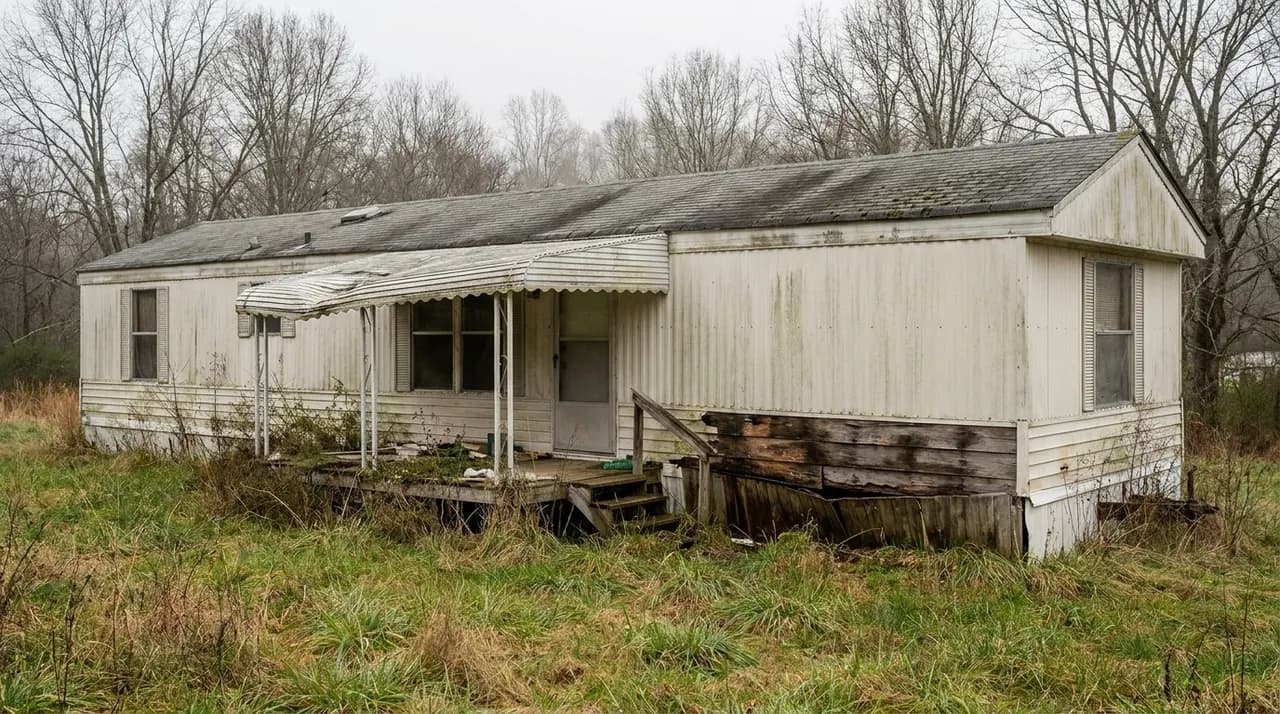
Past 1976, age matters more gently and mostly as a proxy for the condition of major systems. A 1995 home and a 2005 home with equal maintenance are much closer in value than the calendar suggests. What separates them is roof, windows, insulation, and mechanical systems.
4. Single-section versus multi-section
Doublewides and larger multi-section homes generally command more than singlewides, and the reason is not just floor area. They usually have more conventional room layouts, higher ceilings, better insulation packages and drywall interiors rather than panel, all of which read as "house" to a buyer rather than "trailer." That perception difference is worth real money.
The offsetting factor: they are substantially harder and more expensive to relocate, which lowers the fallback value if the home ever has to leave the lot. They also carry the marriage line, the seam where the halves join, a recurring source of roof and interior water damage on older homes.
5. The roof
The highest-consequence condition item on any manufactured home, and the first thing you should look at.
Older homes commonly have a low-slope or nearly flat metal roof, sometimes coated over the years. Newer homes usually have a pitched shingled roof, which is generally the better outcome: it sheds water, ordinary roofers can repair it, and buyers recognize it.
Why the roof dominates: water that gets past it travels through the ceiling cavity, saturates the insulation, runs down inside walls and reaches the subfloor. By the time it shows as a stain, the damage may extend well past the stain. Buyers assume hidden damage wherever there is leak evidence, and price for the unknown.
A sound roof with no leak history is one of the few condition facts that moves value upward rather than merely avoiding a deduction.
6. The floor structure
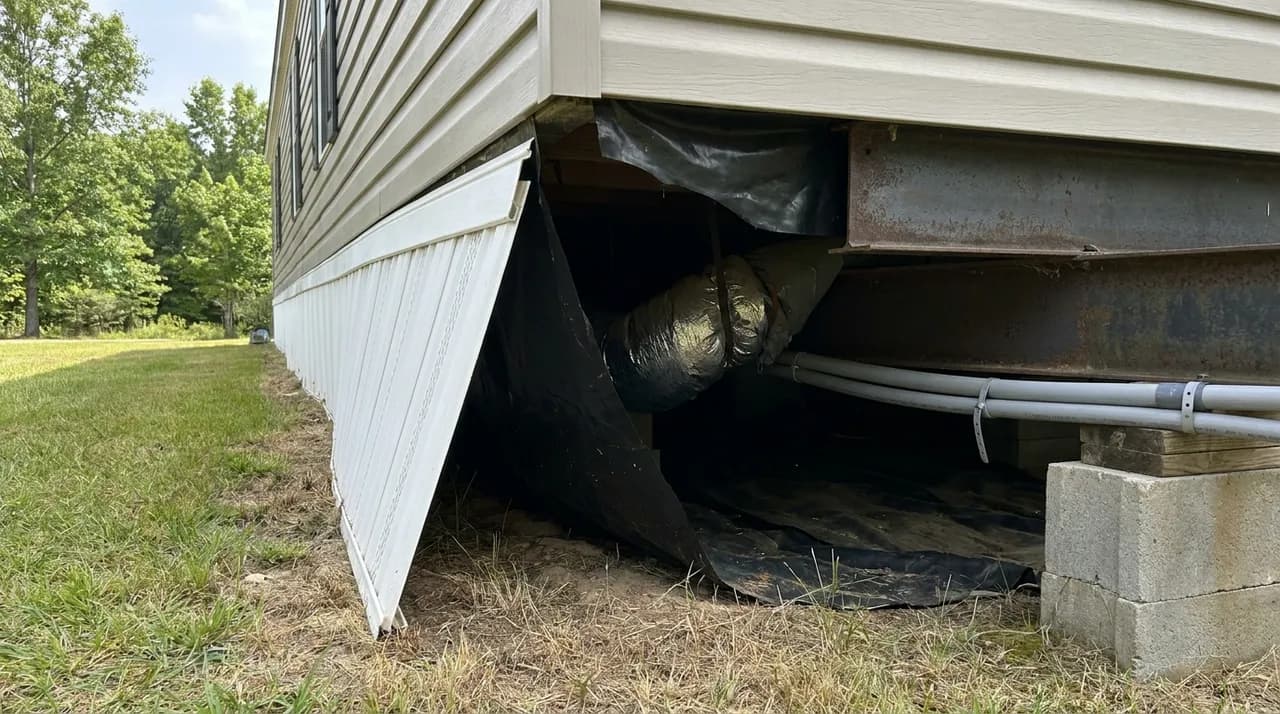
Right behind the roof. Manufactured homes sit on a steel chassis with a wood floor system and an underbelly membrane beneath it. Soft spots generally mean one of three things: a plumbing leak, a roof leak that traveled, or a torn underbelly letting moisture in from below.
Floor repair is invasive and expensive relative to the value of an older home, which is why soft floors produce large deductions. A soft spot is rarely as small as it looks.
7. HVAC and plumbing
HVAC. Manufactured homes frequently use a furnace built specifically for manufactured housing, not interchangeable with a standard residential unit and more expensive to replace. Buyers deduct replacement cost, not the repair hope.
Plumbing. Supply line material is the thing to identify. Certain plastic supply systems used from roughly the late 1970s through the mid 1990s have a documented history of failure at the fittings. Where they are present, buyers price a whole-house repipe rather than a patch, because patching a system with a systemic failure mode is not a repair.
8. Whether the home can be moved
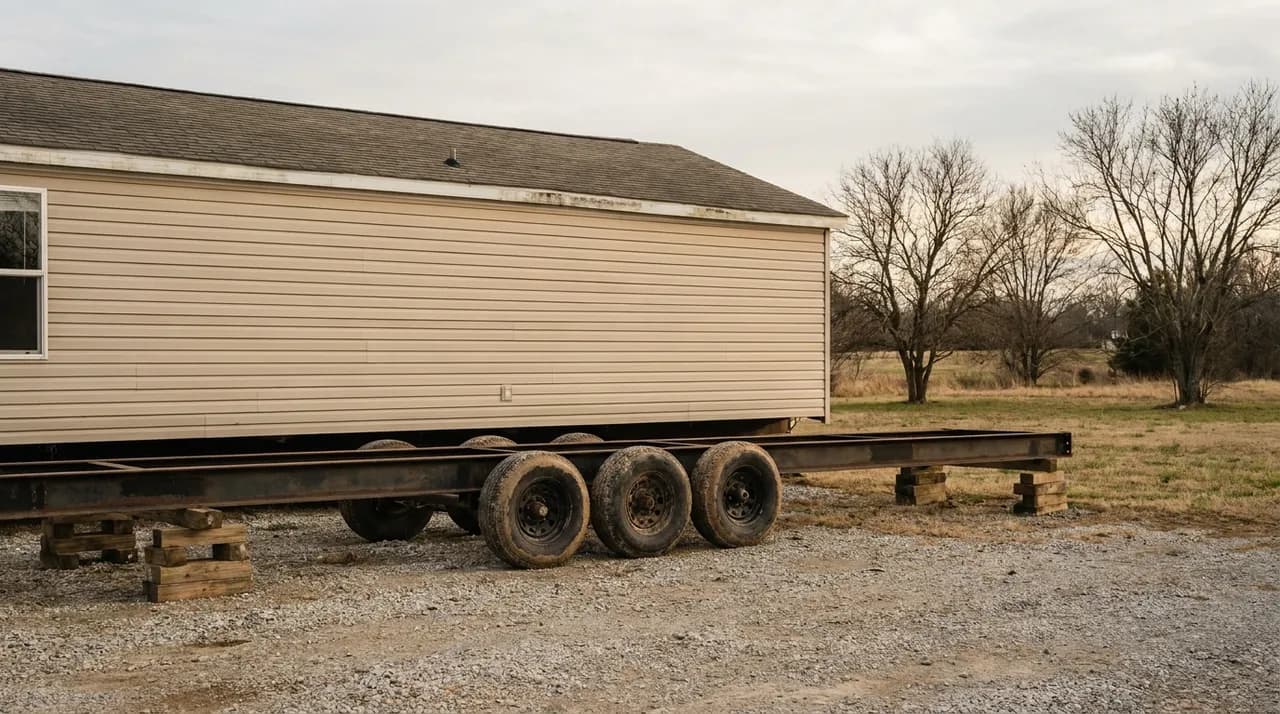
Even for a home staying put, transportability is a floor under its value, because a home that can be relocated has an alternative buyer: someone who wants it on their own land or in a different community.
A home that cannot practically be moved, because of age, size, condition or built-on additions, is worth only what it is worth on that specific lot to a buyer that specific community will approve. That is a much thinner market. The economics of moving a home are worth understanding even if you never intend to do it.
9. Additions, and why they often subtract
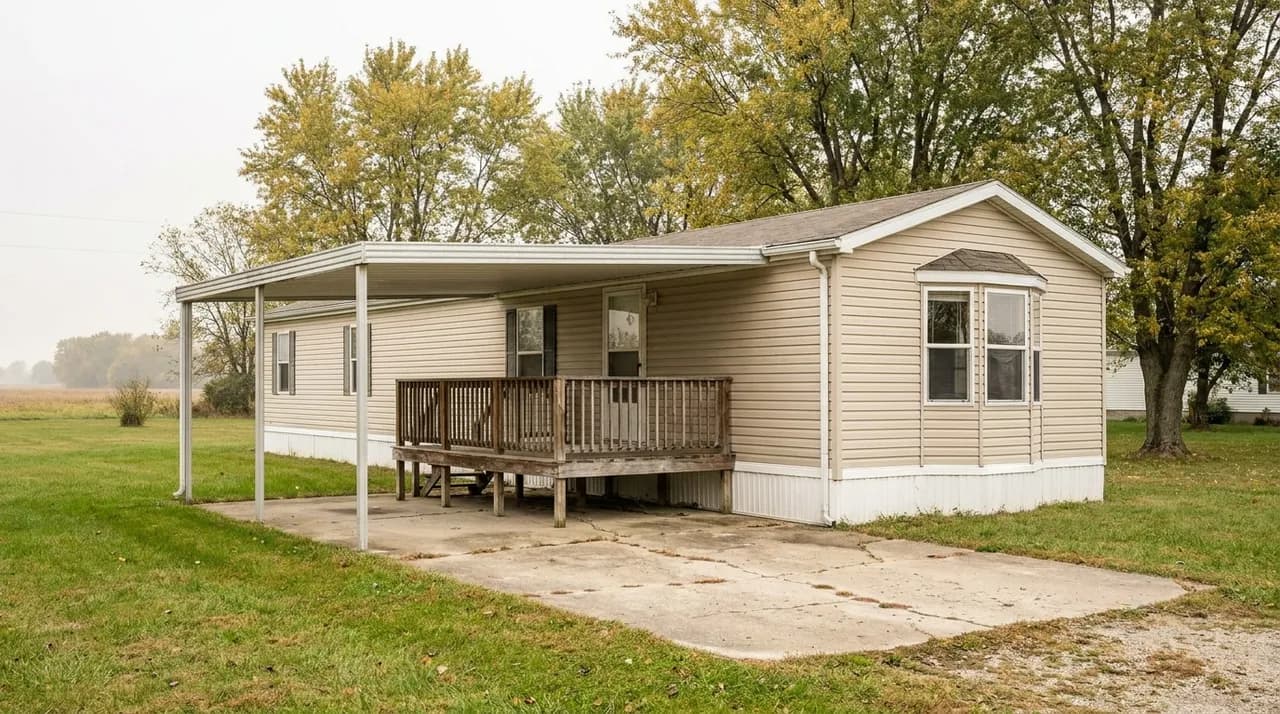
Carports, sunrooms, enclosed porches and add-on rooms are frequently value negative on an older manufactured home. They are often unpermitted, frequently attached in ways that create water intrusion at the connection, may not match what the community has on file, and they make the home harder or impossible to move. A well-built, permitted, properly flashed addition can add value. Most of the ones built over decades in communities are not that.
What to do with this
If you want a real number for your own home, the useful exercise is not a valuation website. It is answering these honestly: is it titled or converted, what will a new tenant pay for the lot, when was it built, what is the roof, is the floor sound, does the HVAC run, and would the community approve a transfer today.
That list is what an experienced buyer evaluates. If you want us to walk through it with you, send us the details. From the buying side, our current inventory shows these factors in practice, and you can read about how we work.
Financing availability, title status, insurance eligibility and community rules all vary by state and by lender, and nothing here is a valuation of any specific home or legal advice. Confirm the specifics for your home and your state.
Sources: 24 CFR Part 3280, Manufactured Home Construction and Safety Standards; U.S. Department of Housing and Urban Development