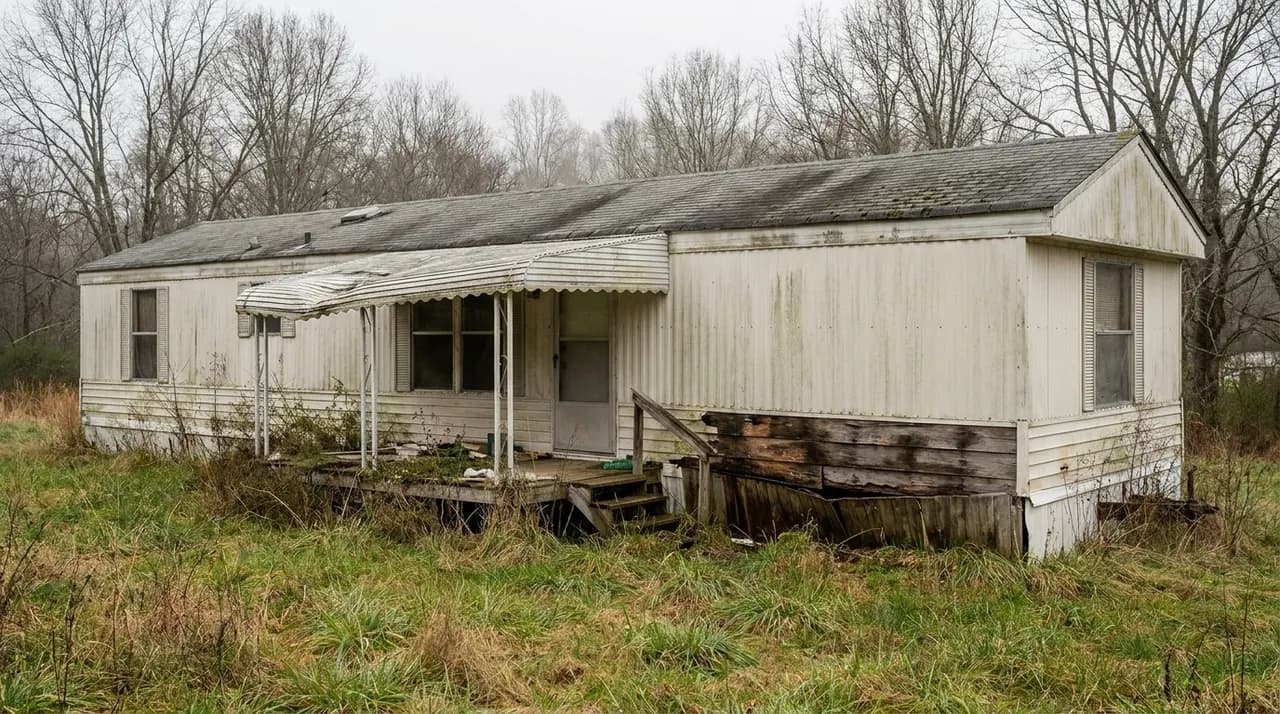
Selling as-is is often described as if it makes condition irrelevant. It does not. It makes condition a pricing input instead of a to-do list.
That is genuinely useful when you cannot fund repairs, cannot supervise contractors, or are hundreds of miles away. But the offer reflects every deferred item, and sellers who do not understand how those deductions get calculated experience the number as arbitrary. It is not arbitrary. It is a fairly mechanical exercise, and it is worth knowing how it works.
The three things a deduction is made of
Every condition deduction has three components, not one.
The repair cost itself. Materials and labor. Sellers usually anticipate this part.
The carrying cost of the time it takes. A buyer taking on a roof and a repipe pays lot rent, utilities and insurance for every week the home is worked on and not sold or occupied. That cost is continuous and it is real money.
The risk premium for what cannot be seen. The part that surprises people, and often the largest of the three. A water stain on a ceiling is not a ceiling problem. It is evidence water got in, and until the ceiling is open nobody knows whether it touched the insulation, the wall cavity, the subfloor, or nothing else. A buyer who has opened a hundred of these prices for the range of outcomes, not the best one.
That is why the most valuable thing a seller can do is reduce uncertainty. An invoice, a photo of work in progress, even an honest description of a known problem all shrink the risk premium. Concealment does the opposite, and usually surfaces anyway.
The roof
The highest-consequence item on any manufactured home, and the first thing looked at.
What matters is not the material, it is whether water has been getting in and for how long. Water past the roof does not stay at the ceiling. It saturates the batt insulation in the ceiling cavity, tracks down inside the wall, and reaches the floor system. That is why a modest-looking stain generates a larger deduction than its area suggests: it signals a chain of damage that may be entirely hidden.
A coating applied over an active leak rather than after fixing it makes this worse, because it hides the evidence while the damage continues.
What helps your price: documentation of when the roof was last done and by whom, and a ceiling that can actually be inspected.
The floor system and the underbelly
Second in impact, and closely related to the first.
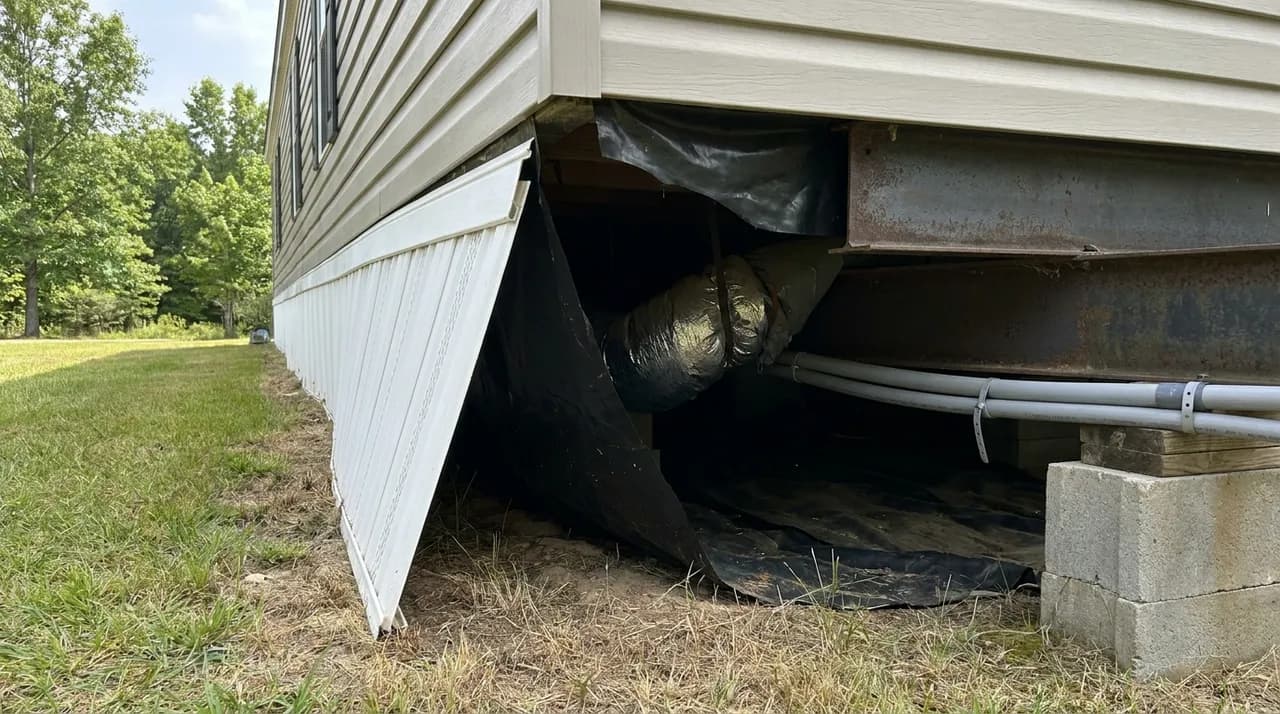
Manufactured homes sit on a steel chassis with a wood floor system above it and a membrane, the belly wrap, beneath. That membrane keeps ground moisture out, keeps insulation in place, and keeps animals out of the floor cavity.
When it tears, three things follow in order: insulation sags and falls, moisture reaches the underside of the floor, and rodents move in. Rodents then damage ductwork, wiring and plumbing from below, which is why a torn belly wrap usually means more than a torn belly wrap.
Soft spots underfoot are the visible symptom, from one of three sources: a roof leak that traveled, a plumbing leak, or moisture from below. Repair is invasive, because reaching the structure means pulling flooring above or opening the belly below. Deductions here are large, and buyers assume a soft spot is bigger than it appears, because it usually is.
Skirting
Skirting looks cosmetic and is not. Its job is to enclose the crawl space, which protects plumbing from freezing, keeps animals out, and maintains the ventilation the home was designed for.
Missing or damaged skirting is both a direct cost and a leading indicator, because it usually means the crawl space has been open to weather and animals for some time. A buyer looks behind it, and what is behind it is the underbelly, the ductwork and the plumbing. It is also one of the few items a community frequently requires at transfer, which makes it non-negotiable rather than a bargaining point.
Plumbing
Two things are assessed: current leaks, and the supply system material. Leaks are straightforward. The material question produces the larger deductions.
Certain plastic supply piping systems used from roughly the late 1970s through the mid 1990s have a documented pattern of failure at the fittings. When a buyer identifies one, they generally price a whole-house repipe rather than a repair. That is rational rather than aggressive: patching one fitting in a system with a systemic failure mode solves nothing, and the next failure happens somewhere you were not looking.
Drain lines are also checked, particularly on older homes, where the drain system sits inside the belly cavity and is expensive to reach.
HVAC
Manufactured homes commonly use a furnace built specifically for manufactured housing, not interchangeable with a standard residential unit and typically more expensive to replace.
The assessment is binary: does it run, and how old is it. A unit that does not run is deducted at full replacement, not at the hope of a cheap fix. Ductwork matters too, and on a manufactured home the ducts run through the belly, which makes damaged ductwork a floor-access job.
A crossover duct between sections that has come apart or been chewed through is extremely common on older homes and often goes unnoticed by an owner who simply knows one end of the house is cold.
Electrical, odor and mold
Electrical is less often a headline item, but three things move the number: aluminum branch circuit wiring from a particular era, panels from manufacturers with a poor safety record, and evidence of unpermitted work. The last is most common. A sunroom wired by a neighbor twenty years ago is a real liability.
Odor is a condition report by itself. Persistent smoke, pet or mildew odor is hard to remediate because the materials that absorb it, panel walls, ceiling board, carpet, subfloor and ductwork, are also structural or expensive to replace.
Visible mold triggers a larger deduction than its area suggests, for the same reason as a roof stain: it is evidence of a moisture source that has to be found and stopped first.
Additions, decks and carports
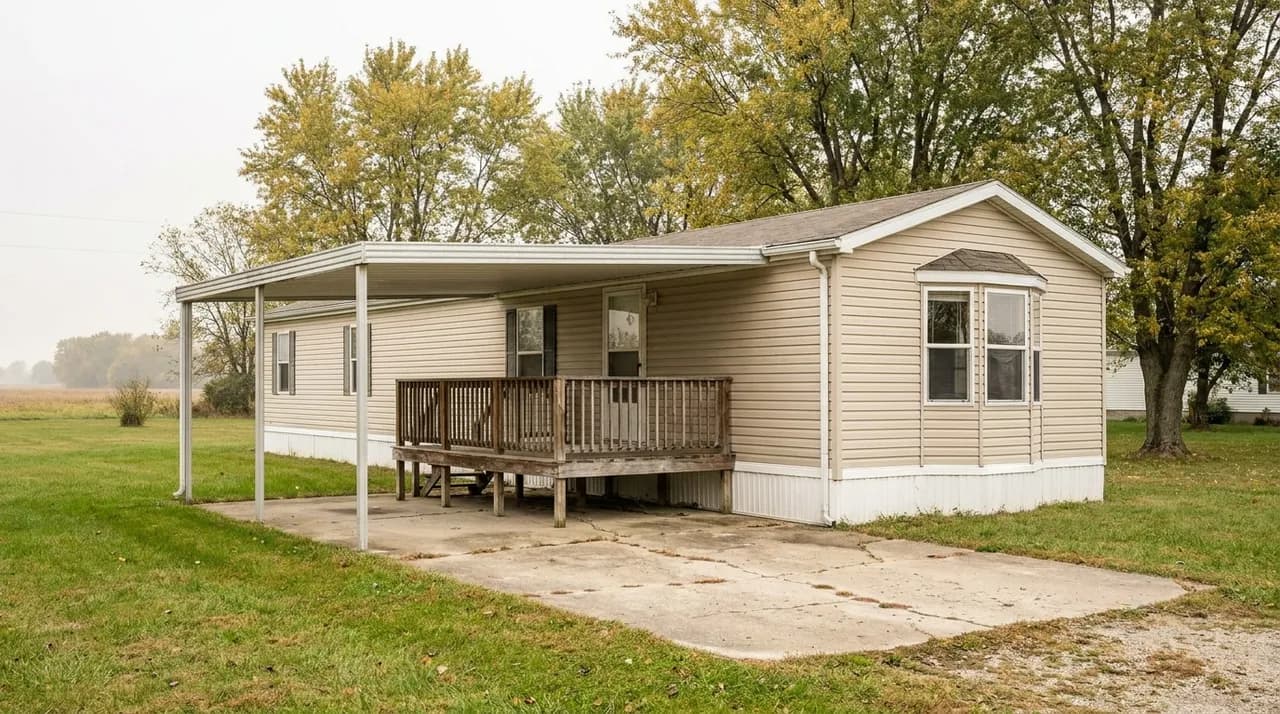
Often value negative. They are frequently unpermitted, attached in ways that create water intrusion at the connection, and not reflected in what the community has on file, and they make the home harder to relocate. A buyer may be pricing removal rather than repair.
What actually helps your as-is price
Five things, none of which involve a contractor:
- Photograph everything, including the problems. A buyer pricing from complete information prices the actual condition. A buyer pricing from partial information prices the worst plausible one.
- Say what you know. If a leak was fixed in 2019, say so. If you do not know when the roof was done, say that too. Honest uncertainty is easier to price than silence.
- Provide any documentation you have. Invoices, permits, warranty paperwork, the data plate.
- Stop active water. A running leak causes more damage weekly and is deducted at projected condition, not today's. A tarp is not a repair, but it stops the clock.
- Get the community's transfer requirement list. Knowing what has to be fixed regardless removes a large unknown.
When as-is is the wrong choice
If the home is in genuinely good condition, sits in a desirable community, is financeable, and you have time and no carrying cost pressure, an as-is cash sale is probably not your best net. List it. That comparison deserves a real look before you accept any offer, and the three-way version is worth walking through.
With real deferred maintenance the calculation usually flips, because retail buyers in communities are largely payment buyers who cannot fund repairs either, and the pool willing to take on a project is small. It is also worth knowing which repairs actually pay back before you spend anything.
We buy manufactured homes as-is, including homes with roof damage, soft floors and systems that do not run, and we explain the reasoning behind any number rather than just handing over a figure. Send us the details and photos, or read more about how we work.
Repair requirements, disclosure obligations and what a community may require at transfer vary by state. This is general information, not legal advice or a professional inspection. Have a licensed inspector or contractor evaluate anything that matters to your decision.