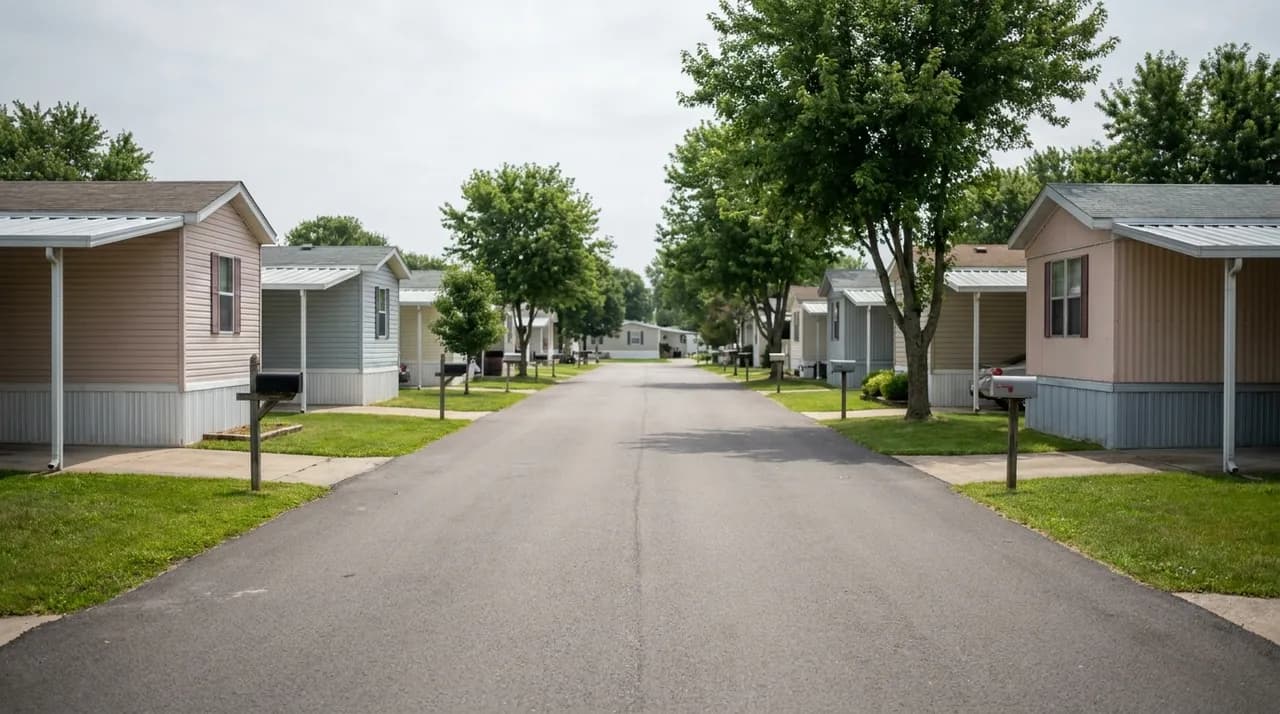
If you are reading this, something happened. A job ended, a medical bill landed, a spouse left or passed away, hours got cut. It is almost never carelessness, and in this line of work you hear the same handful of ordinary life stories over and over.
What is worth saying plainly is this: falling behind on lot rent gets structurally worse with time, and almost every bad outcome here traces back to the same decision, which is waiting to see if it resolves on its own.
This is not legal advice and it is not a lecture. It is an explanation of how the situation usually moves, what your realistic options are, and how to find the rule that governs where you live.
Why lot rent arrears behave differently than other debt
Most debt is just money. Lot rent is money attached to an asset you cannot easily relocate.
You own the home. You rent the ground under it. If the tenancy ends, the home is still yours, but it is sitting on land you no longer have the right to occupy. That is the pressure point, and it is why arrears on a rented lot escalate faster in consequence than a credit card balance of the same size.
Two things follow:
The debt keeps accruing while you decide. Every month of deliberation adds another month of lot rent to whatever you eventually have to resolve, and in many communities late fees on top of it. A seller who comes to us three months into a problem has meaningfully more equity left than the same seller six months in.
Your equity is the collateral. Whatever the home is worth, the arrears come out of it. A home that could have cleared the debt and left money in your pocket in month two can, by month eight, be worth roughly what is owed. That outcome is almost entirely a function of time.
The timeline varies by state, and you need your state's version
This is the part where most articles on this topic go wrong. They tell you a notice period as though it were a national rule. It is not.
Manufactured home lot tenancies are governed by state law, and states differ substantially on:
- How many days of notice a community must give before starting an eviction for nonpayment.
- Whether you have a statutory right to cure the default by paying the balance, and how long that right lasts.
- Whether manufactured home lot tenants get longer or different protections than ordinary residential renters. Many states have a dedicated manufactured housing chapter that does exactly this.
- What happens to the home itself after a tenancy ends, including whether the community can claim it, whether it must be sold, and what notice you get.
- Whether the community can refuse partial payment, and whether accepting a partial payment restarts anything.
- Whether there is a mandatory mediation or pre-filing step.
Some states give manufactured home lot tenants notably more runway than an apartment renter would get, on the reasoning that the tenant owns the structure. Others do not. The only way to know which you are in is to look it up.
How to find your own state's rule
Three places, in this order:
Your lease. Read the nonpayment and default sections. The lease cannot give you less than your state's law requires, but it can tell you the community's own stated process, fees, and notice addresses.
Your state's landlord-tenant or manufactured housing statute. Search for your state name plus "manufactured home" plus "lot rental" or "landlord tenant act." Most state legislatures publish their code online for free. Many states also have a housing or community development agency that publishes a plain-language tenant rights summary specifically for manufactured home communities.
Legal aid. Every state has civil legal aid organizations, and manufactured housing is a common practice area for them because the stakes are high and the residents are often low income. Many operate a free intake line. If you are facing a notice, this is the single highest value phone call available to you, and it costs nothing.
What you want out of those three sources is a short, specific answer to: how many days do I have, and can I cure by paying?
Your realistic options
Broadly there are five, and they are not mutually exclusive.
1. Cure the balance. Pay it off and continue. Obvious, and the best outcome when it is possible. Worth asking about even when it looks out of reach, because some communities will accept a written catch-up plan rather than lose a paying resident and inherit an empty home they have to deal with.
2. Negotiate a payment arrangement in writing. Community managers vary enormously in flexibility, and regional management companies often have more latitude than on-site staff are authorized to offer. Ask specifically, ask in writing, and get any arrangement documented. A verbal understanding with a manager who leaves the job is worth very little.
3. Look for rental and utility assistance. Community action agencies, county human services and some nonprofits administer emergency rental assistance, and many cover lot rent because it is rent. Availability changes constantly. Dialing 211 in most of the country routes you to a local resource line that knows what is currently funded.
4. Sell the home. If the arrears are beyond what income can realistically recover, selling while you still have equity is a legitimate and often the best financial answer. Past-due lot rent is normally paid off at closing out of the proceeds, which means a sale can resolve the debt rather than leaving you carrying it. The key variable is time: the earlier you start, the more likely the sale clears the balance and leaves something over.
5. Move the home. Occasionally viable, usually not. Transport, setup, and a destination lot that will accept the home add up quickly, and most homes that end up in this situation are older ones where the cost of moving exceeds what the home is worth.
Things that feel like options but are not
Walking away. Leaving the home and stopping contact does not usually end the obligation. The tenancy terminates, but the balance often remains collectible, and the disposition of the home is then handled without your input. You lose the asset and frequently keep the debt.
Waiting for a buyer to appear. Selling a home inside a community takes longer than selling a car, because the community has to approve your buyer as a tenant. If you start marketing on the day a notice arrives, the approval process alone may outlast your window.
Ignoring a notice because you intend to pay. Deadlines in a legal notice run whether or not you intend to comply. If you have a notice in hand, the date on it is the most important number in your life this month.
What to do in the next 48 hours
Find your lease. Find the last statement or notice and note the exact balance and date. Call your state's legal aid intake line. Call 211 and ask what rental assistance is currently funded in your county. Then decide honestly whether income over the next ninety days can clear the balance, because that answer determines which of the five options is actually yours.
If the honest answer is no, selling early is not giving up. It is the version of this where you keep your equity instead of watching it get consumed one month at a time.
We buy manufactured homes in communities, including homes with past-due lot rent, and we are used to coordinating a payoff directly with management at closing. We will also tell you when we think you are better off pursuing assistance or a payment plan than taking an offer from us. If you want a straight read on where you stand, send us the details, or read more about how we work first.
Notice periods, cure rights, eviction procedure, and what happens to a home after a lot tenancy ends are all governed by state law and vary significantly from state to state. Nothing here is legal advice. If you have received a notice, contact a licensed attorney or your state's legal aid organization promptly.